Five Drain Myths Liberdade Residents Still Believe
On almost every emergency call in Liberdade, someone says the same thing: “I poured boiling water down the drain and it got worse.” That single sentence captures the most common belief we hear, and it is also the one that most often turns a slow drain into a flooded kitchen. If you are searching for a desentupidora Liberdade São Paulo SP, the fastest way to solve the problem is to stop trusting the drain folklore that circulates in neighborhood buildings and start understanding what actually happens inside the pipes.
This is a myth-busting walk through the five beliefs that cause the most damage in Liberdade apartments, restaurants and mixed-use buildings, with a short correction for each one and a closing checklist you can use the next time a drain starts gurgling.
Myth 1: Chemical Cleaners Are Always Safe for Liberdade Drains
The first belief is that any bottle labeled “drain opener” is a universal fix. In practice, chemical cleaners are one of the most misunderstood products sold in Liberdade’s hardware stores. They are caustic or acidic formulas designed to dissolve organic matter, and they do not distinguish between hair, grease and the pipe wall itself.
What chemical cleaners actually do
Most chemical drain openers generate heat when they react with water and organic material. That heat is what makes them feel effective, but it is also what damages older PVC joints, rubber seals and the thin walls of cast-iron stacks common in pre-1990s buildings around Liberdade. A single overuse can soften a joint that was already near failure.
When they make the blockage worse
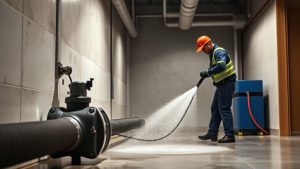
If the clog is mostly grease or a solid object, the chemical may only eat a narrow channel through it. The drain appears to flow for a day, then closes again because the remaining mass has been pushed deeper. Repeated use also leaves a corrosive residue that shortens the life of the entire line. A professional desentupidora Liberdade uses mechanical tools and hydro-jetting rather than chemicals for exactly this reason.
Myth 2: Hot Water Melts Grease and Fixes the Drain
This is the belief that causes the most repeat calls. Hot water does soften grease temporarily, but it does not remove it. In a horizontal drain, the cooled water and grease re-solidify a few meters downstream, usually at the first bend or the building’s main stack connection.
Why the fix is temporary
Grease floats. When you pour hot water, the fat liquefies, travels a short distance and then cools against the pipe wall. Over weeks, that layer thickens into a hard soap-like deposit that narrows the pipe. By the time the drain is slow again, the blockage is no longer at the sink; it is several meters away, which is why plunging the sink does nothing.
The correct approach for kitchen lines
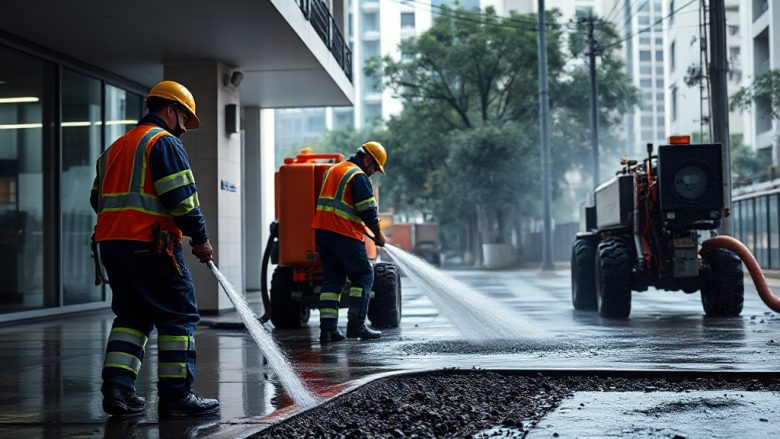
Scrape pans into the trash before washing, wipe residual oil with a paper towel, and use a strainer. For an already-greased line, the right tool is a mechanical snake or hydro-jetting at controlled pressure, not another kettle of boiling water. A technician can confirm whether the line needs rodding or high-pressure washing before the grease hardens into a full blockage.
Myth 3: Slow Drains Fix Themselves If You Wait
Many residents in Liberdade treat a slow drain as a temporary annoyance and wait for it to clear. It almost never does. A slow drain is the early warning stage of a partial blockage, and partial blockages only grow as hair, soap scum, food residue and toilet paper accumulate on the existing mass.
Why waiting costs more
A partial blockage gives water time to sit in the trap and the branch line. Standing water accelerates corrosion at joints and encourages odor, insects and, in ground-floor units, backflow into showers and floor drains. What would have been a routine 30-minute service becomes an emergency call at night, often with water already on the floor.
What to do instead
Treat any drain that drains noticeably slower than the others as a scheduled maintenance item. A desentupidora em Liberdade São Paulo SP can inspect the line, identify whether the cause is grease, roots, scale or a collapsed section, and clear it before it becomes a flood. Preventive inspection is always cheaper than emergency extraction.
Myth 4: All Unclogging Services Are Interchangeable
The fourth belief is that any number you find online will do the same job at the same quality. In reality, drain services differ significantly in equipment, training and scope. A handyman with a manual auger can clear a bathroom sink; it cannot clear a main sewer line, a grease-choked restaurant kitchen line or a root intrusion in a garden stack.
What separates a professional service
- Proper equipment: motorized augers, hydro-jetting units and inspection cameras rather than plungers and hand snakes.
- Diagnosis before action: identifying the blockage type and location before choosing a method.
- Containment and cleanup: protecting floors, containing wastewater and disinfecting the area afterward.
- Documentation: a written report for building managers and insurers when the blockage affects common areas.
Why Liberdade buildings need specialists
Liberdade has a dense mix of older residential buildings, ground-floor restaurants and shared commercial stacks. A service that works in a single-family home may not understand the shared responsibility between units, the building’s grease trap or the local sewer connection. Choosing a specialist avoids repeat visits and disputes with neighbors and the condominium administration.
Myth 5: A Cleared Drain Means the Problem Is Solved
The final myth is the most expensive one: the belief that once water flows again, the job is done. Clearing a blockage restores flow, but it does not address the cause. If the cause was grease, scale, roots or a sagging pipe section, the blockage will return, often within weeks.
Prevention is part of the service
A complete service includes a camera inspection where needed, a recommendation on whether the line requires hydro-jetting, and guidance on what should never go down the drain. For restaurants and condominiums, a preventive maintenance schedule is the only reliable way to avoid repeat emergencies.
What residents should ask after a service
Ask what caused the blockage, what tool was used, whether the line was inspected, and what maintenance interval is recommended. A provider that cannot answer these questions is likely to be back at your door with the same problem in a few months.
Quick Reference: Myth vs. Reality
| Myth | Reality |
|---|---|
| Chemical cleaners are always safe | They can damage pipes and seals and rarely clear the full blockage |
| Hot water melts grease | Grease re-solidifies downstream and worsens the clog |
| Slow drains fix themselves | They worsen and lead to backflow and higher repair costs |
| All unclogging services are the same | Equipment, diagnosis and documentation vary widely |
| A cleared drain means the problem is solved | The cause must be addressed to prevent recurrence |
Frequently Asked Questions
Is it safe to use chemical drain cleaner in an older Liberdade apartment?
Generally no. Older PVC, cast iron and rubber seals are more vulnerable to the heat and corrosion generated by chemical cleaners. Mechanical methods are safer and more effective for older lines.
How do I know if my slow drain is a partial blockage or a venting problem?
Gurgling sounds, sewer odors and slow drainage across multiple fixtures usually point to venting or a main-line issue. A single slow fixture more often indicates a local blockage. A camera inspection confirms which one it is.
Can a professional service prevent blockages before they happen?
Yes. Preventive hydro-jetting, grease trap maintenance and scheduled inspections remove buildup before it closes the pipe, which is especially valuable for restaurants and condominiums in Liberdade.
What should I do first when a drain backs up at night?
Stop using water on that line, avoid chemical products, and call a 24-hour emergency service. Contain any standing water and keep the area ventilated until a technician arrives.
Liberdade’s drains are older, shared and heavily used, which makes folklore expensive. The five myths above survive because they offer a quick fix, but each one pushes the real problem deeper into the line. Understanding what actually happens inside the pipe is the first step toward a drain that stays clear, and the second step is choosing a service that diagnoses before it acts.