Cable, Hydrojet or Plunger? Comparing Drain Options in Itanhaém SP
When a drain slows in Itanhaém, the real decision is not which tool sounds strongest — it is which method matches the blockage, the pipe material and your tolerance for risk. Four common options dominate the conversation: a manual plunger, a cable machine, hydrojetting and chemical products. Each has a different cost profile, a different risk of damaging older plumbing, and a different chance of actually clearing the line rather than just poking a hole through it. If you want a professional assessment before you start, a local desentupidora Itanhaém SP can identify the cause instead of guessing at it.
This comparison is written for a homeowner or small commercial property owner who wants to act sensibly, not to sell one method as universally superior. There is no single winner. The right choice depends on whether the problem is a local clog, a recurring backup, grease buildup, roots or a failing pipe — and on how much you are willing to spend to avoid a bigger repair later.
Start With the Symptom, Not the Tool
Before comparing equipment, identify what the drain is telling you. A single sink that drains slowly is a very different problem from a floor drain that gurgles when the toilet flushes, or from sewage backing up into a shower tray. The first usually points to a local clog in the trap or branch line; the second suggests a blockage further down the shared drain or in the main sewer connection.
In Itanhaém, many properties sit close to the coast and range from older houses with cast iron or ceramic lines to newer buildings with PVC. That matters because the same method that is safe on a modern PVC stack can crack a corroded older pipe. Match the method to the pipe, not just to the clog.
Ask three questions before choosing anything:
- Is the backup in one fixture or several?
- Does the water drain slowly, or not at all?
- Has this happened before in the same spot?
A single slow fixture that has never backed up before is a candidate for a plunger or a cable. A repeat backup in the same line, or sewage rising in multiple fixtures, is a sign that the pipe needs proper inspection and probably professional equipment.
Option 1: The Manual Plunger
The plunger is the cheapest and most accessible option, and it is often the right first move for a simple trap clog. A cup plunger works on sinks and tubs; a flange plunger is designed for toilets. The technique matters more than the tool: you need enough water to seal the cup, a firm push-and-pull motion, and a steady rhythm rather than a single violent shove.
When a plunger actually works
It works best on soft, local blockages — hair and soap in a bathroom sink, food residue in a kitchen trap, or a toilet clog caused by too much paper. If the water level drops noticeably after a few attempts, you are making progress.
Where it fails
A plunger cannot clear a blockage that is several metres down the line, and it cannot remove grease that has hardened on the pipe wall. It also does nothing for root intrusion. If the drain backs up again within a day or two, the clog was never really cleared.
Verdict: low cost, low risk, limited reach. Try it first on a single slow fixture, but stop if there is no improvement after a handful of attempts.
Option 2: The Cable Machine
A drain snake, or cable machine, feeds a flexible steel cable into the pipe and breaks up or pulls back the obstruction. Manual versions suit short runs; powered machines handle longer distances and tougher blockages. This is the standard tool for a clog that sits beyond the trap, such as a kitchen line clogged with grease or a bathroom branch line blocked by hair and soap.
Strengths of cabling
Cabling is effective on solid or semi-solid obstructions and can reach several metres into a branch line. It is generally gentler on pipes than high-pressure water, and a skilled operator can feel when the cable meets resistance versus when it is scraping the pipe wall.
Limits and risks
A cable opens a channel through a blockage rather than cleaning the whole pipe wall, so grease and scale can remain and cause a repeat clog. Aggressive use on old or brittle pipes can damage joints. And a cable cannot remove roots that have grown through a joint — it may cut them, but they grow back.
Verdict: the best general-purpose middle option for a confirmed branch-line clog. It is more capable than a plunger but less thorough than hydrojetting on greasy lines.
Option 3: Hydrojetting
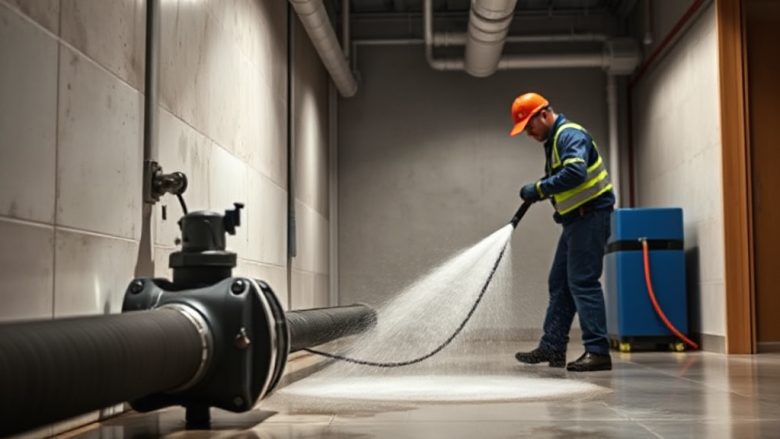
Hydrojetting uses high-pressure water directed through a specialised nozzle to scour the inside of the pipe. It does not just punch a hole through a clog — it cleans the pipe wall, removing grease, scale, silt and soft root material. For a property with a recurring backup in the same line, this is often the method that addresses the cause rather than the symptom.
Where hydrojetting is the right call
It suits grease-heavy kitchen lines, older sewer laterals with buildup, and any drain that has been cleared by cable but keeps blocking again. It is also the standard follow-up after a camera inspection confirms that the pipe is structurally sound but heavily fouled.
Where it should not be used
High-pressure water is not appropriate for a pipe that is already cracked, collapsed or badly corroded, because it can worsen the damage. That is why a professional will usually inspect before jetting. A responsible desentupidora Itanhaém will check the line condition first rather than jetting blind.
Verdict: the most thorough option for recurring grease and scale, but it requires a pipe in reasonable condition and professional operation. It is not a DIY method.
Option 4: Chemical Drain Products
Off-the-shelf chemical cleaners are sold as a quick fix, and they can dissolve light organic buildup in a trap. The appeal is obvious: no equipment, no mess, no call-out. The drawbacks are less obvious but important.
What chemicals can and cannot do
They work on soft organic matter such as hair and soap scum in a small volume of water. They do not clear a solid blockage, grease that has hardened, roots or a collapsed pipe. Pouring a strong chemical into a drain that is fully blocked simply leaves a pool of caustic liquid sitting in the pipe.
The hidden risks
Repeated use can damage older pipes and rubber seals, and mixing different products can produce dangerous fumes. If a professional is called afterwards, the technician may be exposed to the chemical residue. Never combine chemical cleaners with a plunger or cable in the same session.
Verdict: acceptable as a light maintenance measure on a slow but flowing drain, not as a solution for a real blockage. Treat it as the weakest option for anything beyond minor buildup.
Choosing Between Them for an Itanhaém Property
The practical selection comes down to a short set of conditions. For a single slow sink or tub with no history of backups, start with a plunger, then move to a cable if that fails. For a kitchen line with grease buildup or a drain that keeps blocking, cabling may clear it temporarily, but hydrojetting is the method that cleans the pipe wall and reduces recurrence.
For sewage backing up into multiple fixtures, or a drain that has been cleared repeatedly in the same spot, skip the DIY options and arrange an inspection. That is the point where a camera check and professional equipment save money, because the alternative is repeated call-outs that never fix the underlying cause. A local desentupidora em Itanhaém SP can assess the line and recommend the appropriate method rather than applying the same tool to every job.
| Method | Best for | Main risk | DIY friendly |
|---|---|---|---|
| Plunger | Local trap clogs | Little effect on deep blockages | Yes |
| Cable machine | Branch-line obstructions | Pipe damage if used aggressively | Manual versions only |
| Hydrojetting | Grease, scale, recurring backups | Damages weak or cracked pipes | No |
| Chemical cleaner | Light organic buildup | Pipe and seal damage, fumes | Yes, with caution |
The final consideration is cost over time, not cost today. A plunger costs almost nothing but solves only the simplest problem. A cable is a reasonable middle step. Hydrojetting costs more per visit but is often the cheaper choice across a year of repeat blockages. Chemical products look cheapest until they damage a seal or leave a blocked line full of caustic liquid. Weigh the method against the symptom, the pipe condition and the history of the drain, and the choice becomes far less arbitrary than it first appears.